We work where
your systems don't.
Your system holds the data. It was never going to fit how your business actually runs, so your people invented the rest: the spreadsheet, the second screen, the thing everyone knows to check on Fridays.
Balmer Works is the layer between you and your systems, built to fit how your business actually runs. Whatever system your data lives in, it fills the gaps your software left open, takes over what your people invented, shows a person what needs judgment, and stays quiet about the rest.
A place where things are made.
Every system starts as one thing, built for one business, and put in front of the person who has to use it every day. It goes live when it earns its place, not when a roadmap says so. What gets learned on one bench goes into the next one.
One system running. More on the bench.
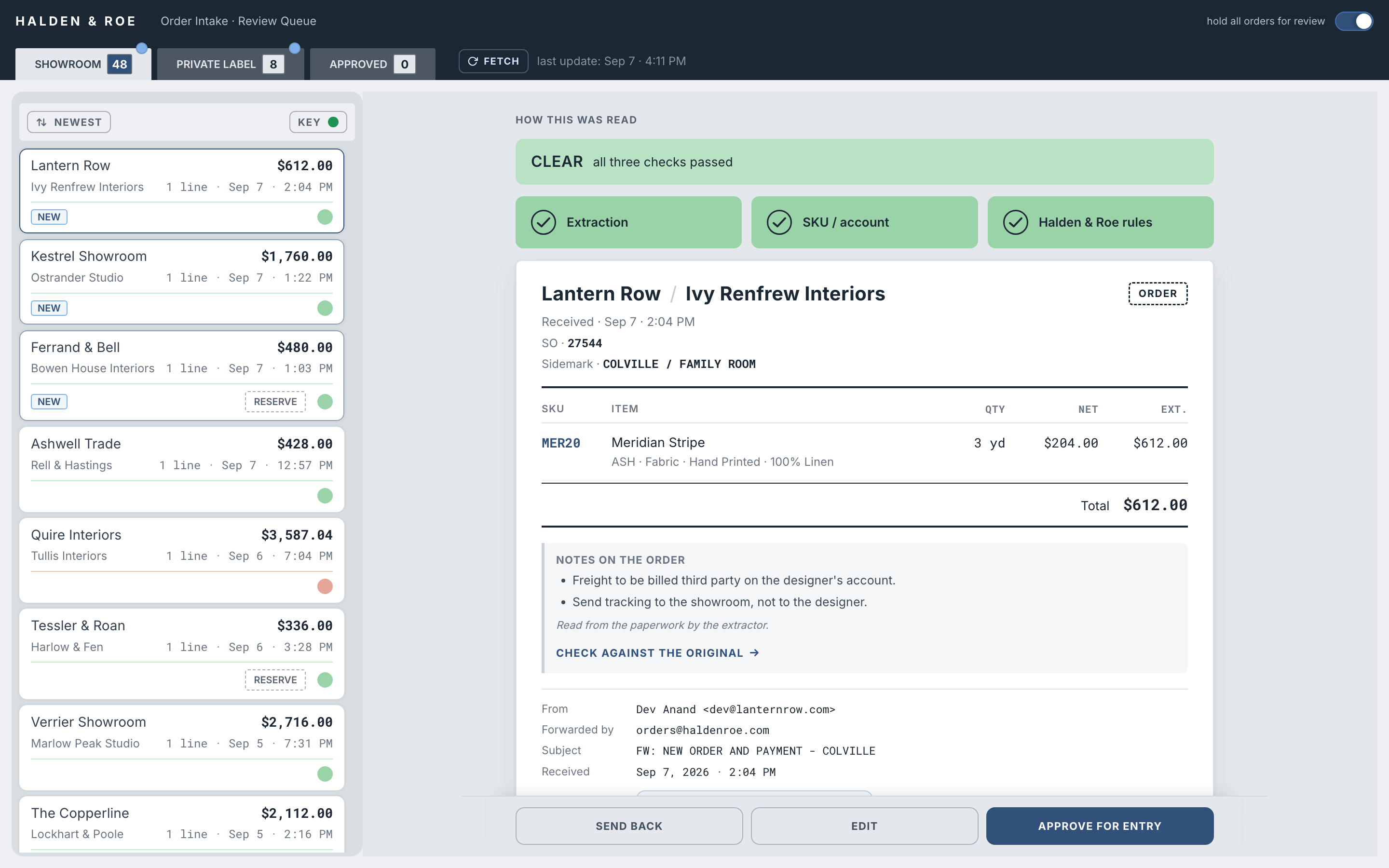
One is live today: order intake at Peter Fasano. It reads the work where it actually arrives. Compares it against what your records already say. Checks it. Says what couldn't be checked. Shows its work. Speaks up only when a person is needed. The next ones sit in different corners of the business and do different work, but they end the same way: the system carries what's mechanical, and the decision stays with you.
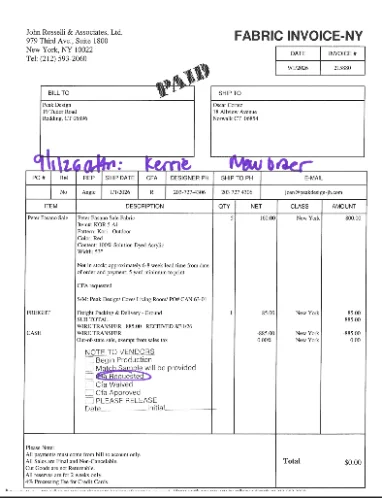
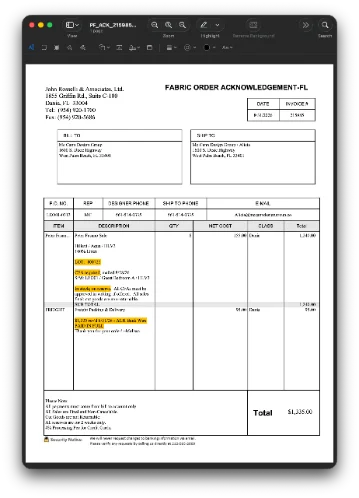
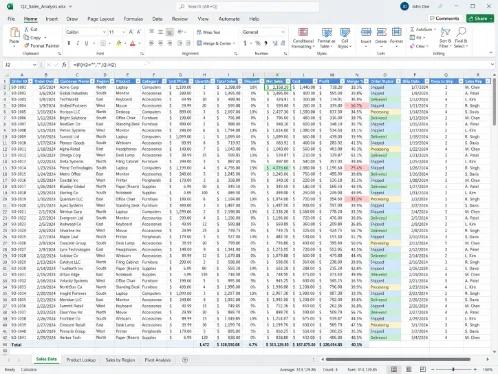
Order intake at Peter Fasano
Orders arrive as email: typed, scanned, sometimes handwritten. The layer reads every one, checks it against the live catalog, and holds it for a person with every field traced to the paperwork. It enters nothing into the ERP and decides nothing. Running hourly and unattended since July 2026, at about five cents an order.
The same layer pointed at the money, reading statements and invoices against the record, and at the stock, reading work in progress against open orders. In design, not yet built.
Anyone can add AI to a business. The hard part is the part nobody budgets for.
Whether the people who have to live with it can see what it did, correct it, and stay in charge. That's not a model problem. It's a design problem, and it's most of the work.
- 01Start with the gapThe software was built to run one way and your business runs another. Someone is already closing that distance by hand, and that workaround is the requirement.
- 02Make one and hand it over earlyA working thing on your real work in days, not a deck about a working thing in months.
- 03Watch where it failsThen fix the tool, never the person. If someone has to remember a workaround, the tool is wrong.
- 04Say what it can't doOut loud, in the interface, every time. A tool that hides its limits is a tool nobody can trust twice.
- 05Earn control, never take itA system can do real work without the power to change anything. That power is separate. You grant it later, if you ever decide to. Some never will.
- 06Hand it over as propertyYour data stays yours and your habits stay yours. Nothing trains on your data, and nothing it learns about your people leaves the building.
Most people building this come from engineering. I came from the other side.
I was trained to design. You build something, hand it to someone, watch where it fails, and make the next one better. Nothing counts until a real person uses it without you standing there.
That's still the method, applied to software instead, most recently at EY for Fortune 100 clients and at Amazon Ads. It's why these systems show their work, explain themselves, and leave the deciding to you. Trust isn't a feature you add at the end. It's the shape of the thing.

A product design director whose work runs from HBO, the NBA, and American Express through Oracle and The Trade Desk to EY's Fortune 100 clients and Amazon Ads. His first AI build, in 2023, was a real-time logistics planner that won EY's internal AI competition, and since 2025 he has designed, built, and run production AI systems, most recently the order intake layer at Peter Fasano. Balmer Works is a Denver, Colorado company and continues the independent practice he founded in 2015.
Greg on LinkedIn →Tell me where your systems stop and your people start.
Somewhere in your business there's a spreadsheet beside the system, a second screen, and a person who checks. One conversation, no deck: describe how work reaches your team and I'll tell you what a layer would catch, and whether it's worth building.